Introduction The Digital Revolution of Competitive Gaming
Esports has rapidly grown from a small niche hobby into a global spectacle that rivals the world’s biggest traditional sports. What was once a casual pastime played in bedrooms has evolved into a powerful industry filled with professional teams, dedicated arenas, international tournaments, and millions of passionate fans. The rise of esports signals a transformation in how society views competition, entertainment, and digital skill. It represents far more than just video games; it is a blend of strategy, reflexes, teamwork, and innovation. As technology advances and the digital world expands, esports continues to redefine what it means to be an athlete in the twenty first century.
The Evolution of Esports From Arcade Fun to Global Fame
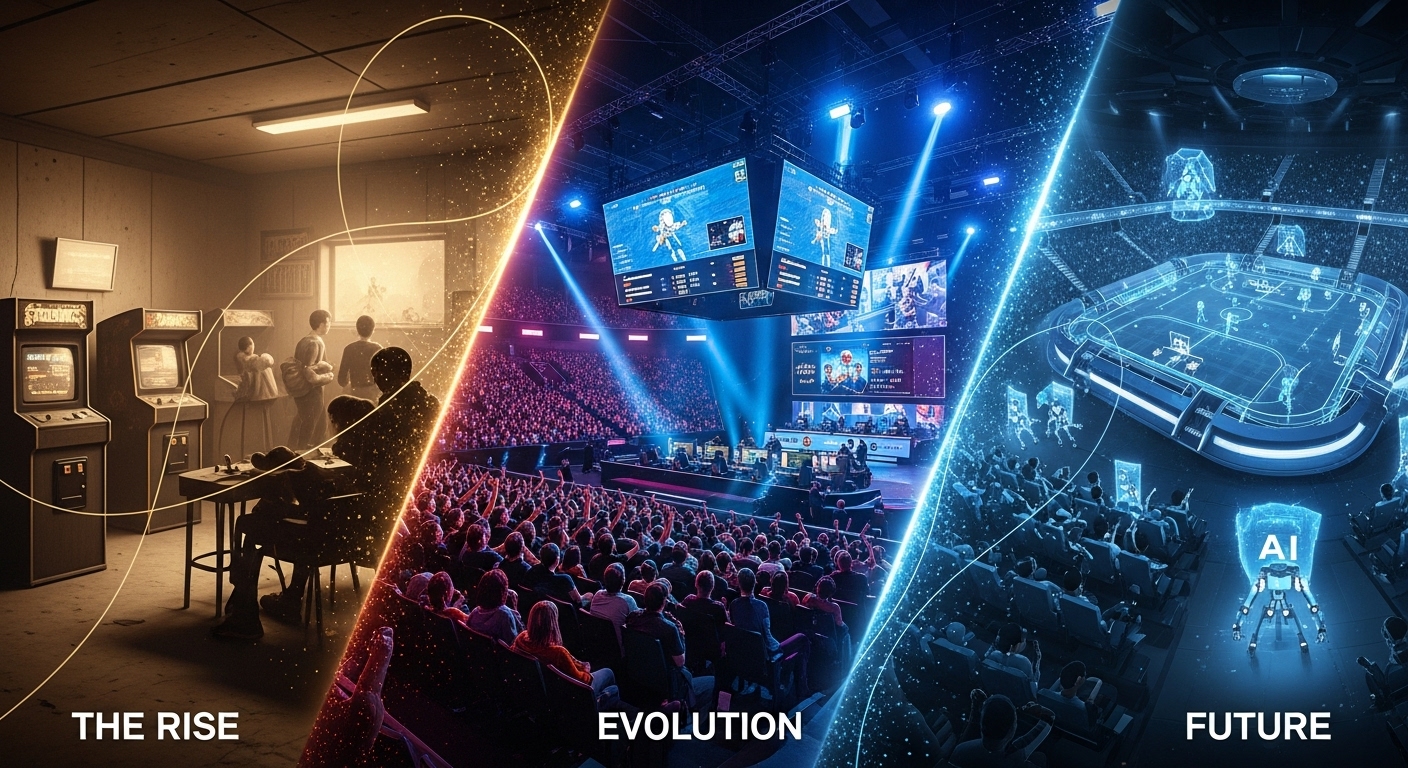
The journey of esports began decades ago with arcade competitions and early computer games. Those simple contests sparked a movement that grew with advancements in technology. As gaming consoles, computers, and online multiplayer networks developed, competitive gaming gained structure and recognition. Events that once took place in small community centers or local cafes now fill stadiums with roaring crowds. Professional gaming organizations emerged, offering training facilities, coaching staffs, and sponsorship deals. Esports no longer belongs to an underground culture; it is now a mainstream phenomenon that commands global attention and respect.
The Skills Behind the Screen Precision, Strategy, and Mental Agility
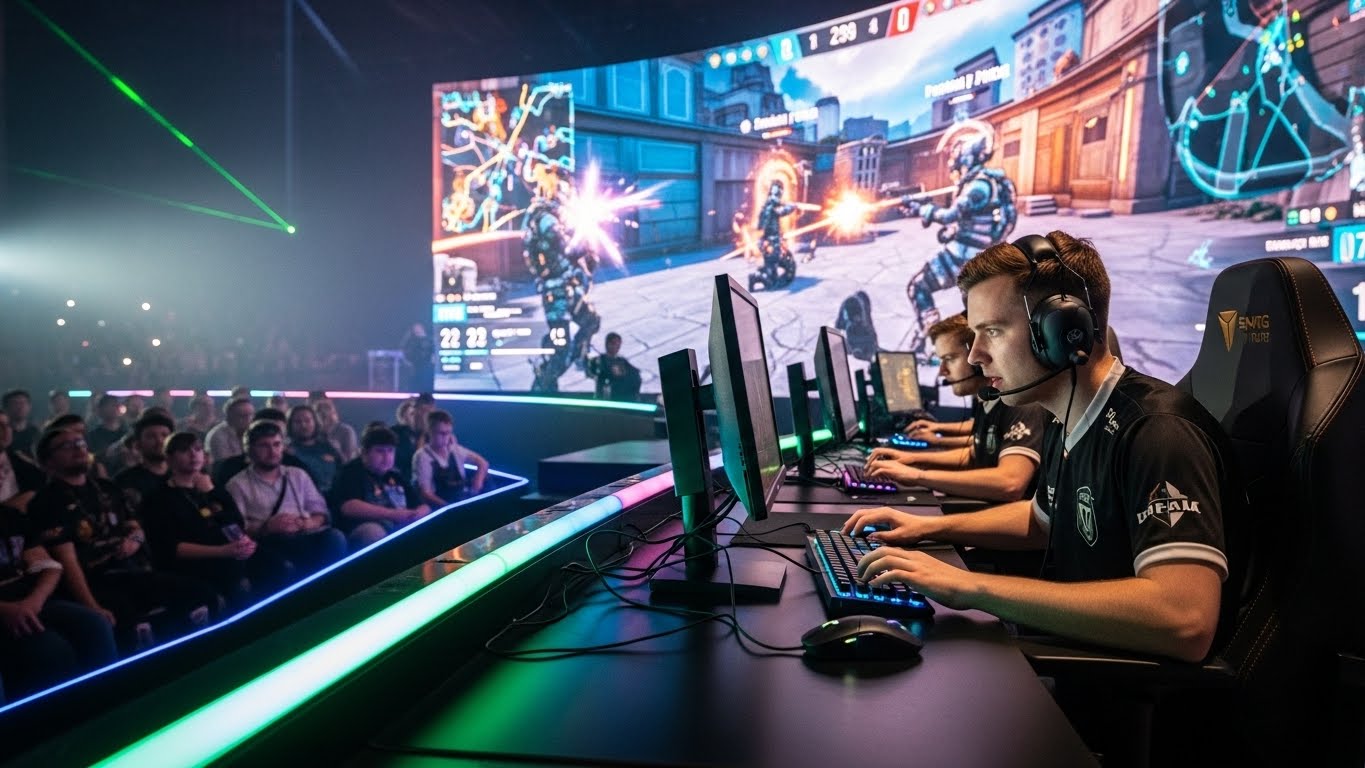
Competitive gaming requires an elite level of skill that often goes unnoticed by those outside the esports world. Esports players must possess lightning fast reflexes, precise hand eye coordination, and exceptional multitasking abilities. They must remember complex strategies, track multiple moving elements on screen, and communicate immediately with teammates. In many ways, esports mirrors the intensity and discipline of traditional sports. Players analyze replays, develop advanced tactics, and practice for hours each day to sharpen their skills. What separates champions from everyone else is not just talent, but their ability to remain calm under high pressure and adapt to unpredictable scenarios.
Teamwork and Communication The Core of Esports Success
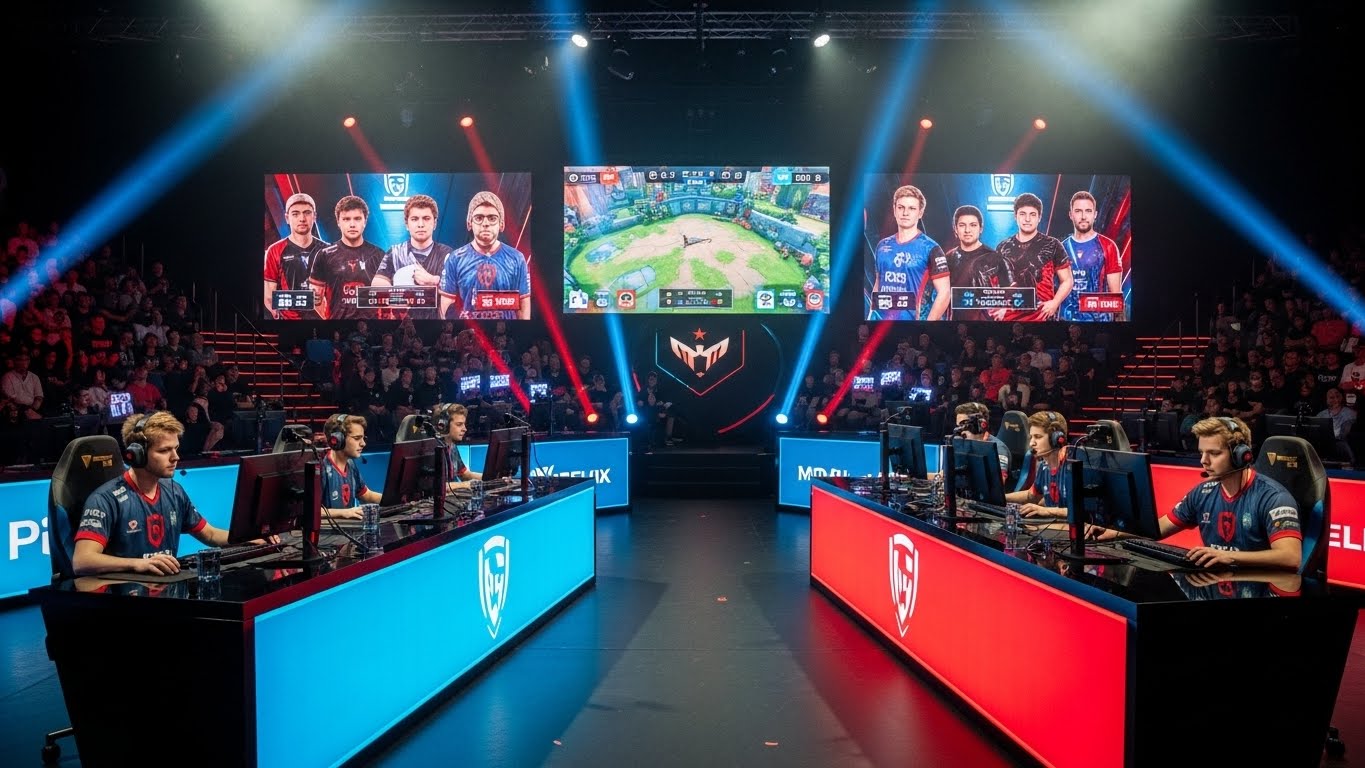
While some esports titles highlight individual performance, most professional scenes rely heavily on teamwork. Coordination between players is essential, as success depends on trust, communication, and synchronized decision making. Teams often spend countless hours practicing together, developing chemistry that allows them to move as one unit. Coaches play a vital role as well, providing guidance, analyzing opponents, and organizing strategies. Much like athletes on a physical field, esports players depend on each other to maintain momentum, secure objectives, and execute plans with flawless timing.
Esports as a Career Opportunities in a Growing Industry
Not long ago, the idea of earning a living by playing games seemed unrealistic. Today, esports careers are not only possible but increasingly common. Professional players earn money through tournament winnings, salaries from organizations, brand sponsorships, and content creation. Beyond playing, the esports world offers roles such as coaching, commentary, broadcasting, event management, and game analysis. Content creators, streamers, and influencers also contribute to the ecosystem by building communities and sharing their gaming expertise with audiences around the world. With universities offering esports scholarships and companies investing heavily in gaming infrastructure, esports is now a stable and respected career path.
The Cultural Impact of Esports A Global Community United by Play
Esports has created a vibrant culture that brings together people from different countries, languages, and backgrounds. Fans develop deep connections with teams and players, celebrating victories and sharing enthusiasm across social media and community forums. Gaming conventions, fan meet ups, and global tournaments strengthen this sense of belonging. Esports culture thrives on creativity, from fan art and cosplay to commentary videos and team merchandise. This worldwide community demonstrates that digital platforms can unite people just as deeply as traditional sports, if not more, thanks to the accessibility and inclusivity of gaming.
Technology at the Heart of Esports Innovation and Immersion
Esports owes much of its growth to the rapid advancement of technology. High performance gaming PCs, advanced consoles, and ultra responsive monitors make precise gameplay possible. Developers constantly refine mechanics to ensure balance and fairness in competitive scenes. Streaming technology has made esports accessible to anyone with an internet connection, allowing fans to watch live events, interact with players, and join global discussions in real time. Innovations such as virtual reality, artificial intelligence, and enhanced graphics are shaping the future of competitive gaming. These technologies are not only improving performance but also creating new experiences that push the boundaries of the digital world.
Esports in Education Building Skills for the Future
Schools and universities across the globe have embraced esports as a legitimate tool for learning and development. Esports programs teach students teamwork, leadership, problem solving, and communication skills. These essential abilities translate well into professional environments outside gaming. Academic institutions also offer esports scholarships to talented players, allowing them to balance education with their competitive goals. Courses focusing on game design, esports management, and digital media are preparing students for diverse careers in the gaming and technology industries. Esports has become a valuable addition to educational systems, promoting both personal growth and professional potential.
Health and Wellness in Esports Maintaining Balance in a Digital Environment
Contrary to stereotypes, modern esports organizations prioritize the health and wellness of their players. Proper posture, eye care, exercise, and mental health practices are integrated into training routines to ensure long term performance. Many teams hire physical trainers, sports psychologists, and nutritionists to create balanced lifestyles for players. A healthy routine helps prevent burnout, improves reaction times, and enhances focus during competitions. The industry’s shift toward holistic wellness emphasizes that esports is not merely sitting and playing; it is a rigorous and disciplined profession that requires full body and mind engagement.
Esports Challenges The Battle for Fairness and Sustainability
As esports continues to grow, it faces several obstacles. Issues such as online toxicity, cheating, and unregulated tournaments can threaten the integrity of the industry. Heavy screen time and intense pressure may lead to stress or burnout for professional players. Ensuring fair play is also a constant challenge, especially in online settings where hacking or exploits can disrupt competitive environments. To overcome these hurdles, organizations are implementing better regulations, improved anti cheat systems, and mental health initiatives. These efforts will help maintain the credibility and sustainability of esports as it moves into the future.
Global Reach and Diversity A Universal Platform for Talent
One of the greatest strengths of esports is its accessibility. Unlike many traditional sports that require specific physical abilities, esports welcomes players of all genders, backgrounds, and regions. All that is required is passion, dedication, and access to a digital device. This inclusivity has created a melting pot of cultures, with players from Asia, Europe, North America, the Middle East, Africa, and South America all competing at the highest levels. Esports proves that talent can come from anywhere, making it one of the most democratic forms of competition in the world.
The Future of Esports Expanding into New Frontiers
The future of esports is bright and full of exciting possibilities. As technology continues to evolve, esports will expand into new genres, platforms, and formats. Virtual reality competitions may become mainstream, offering more immersive experiences. Artificial intelligence could reshape training methods and strategy development. Esports may even become part of global sporting events on an international scale. With investments increasing and new fans joining every day, esports is on track to become one of the most influential entertainment industries of the twenty first century.
Conclusion The Legacy and Promise of Esports
Esports has achieved what few industries have accomplished in such a short time. It has transformed from a hobby into a global powerhouse that merges strategy, teamwork, technology, and passion. It has built communities, inspired careers, and connected millions across the world through the shared excitement of digital competition. As esports continues to grow, it remains a testament to human innovation and the power of play. In a world increasingly shaped by technology, esports stands as a symbol of modern excellence, proving that the digital arena is just as thrilling, challenging, and meaningful as any traditional sport.