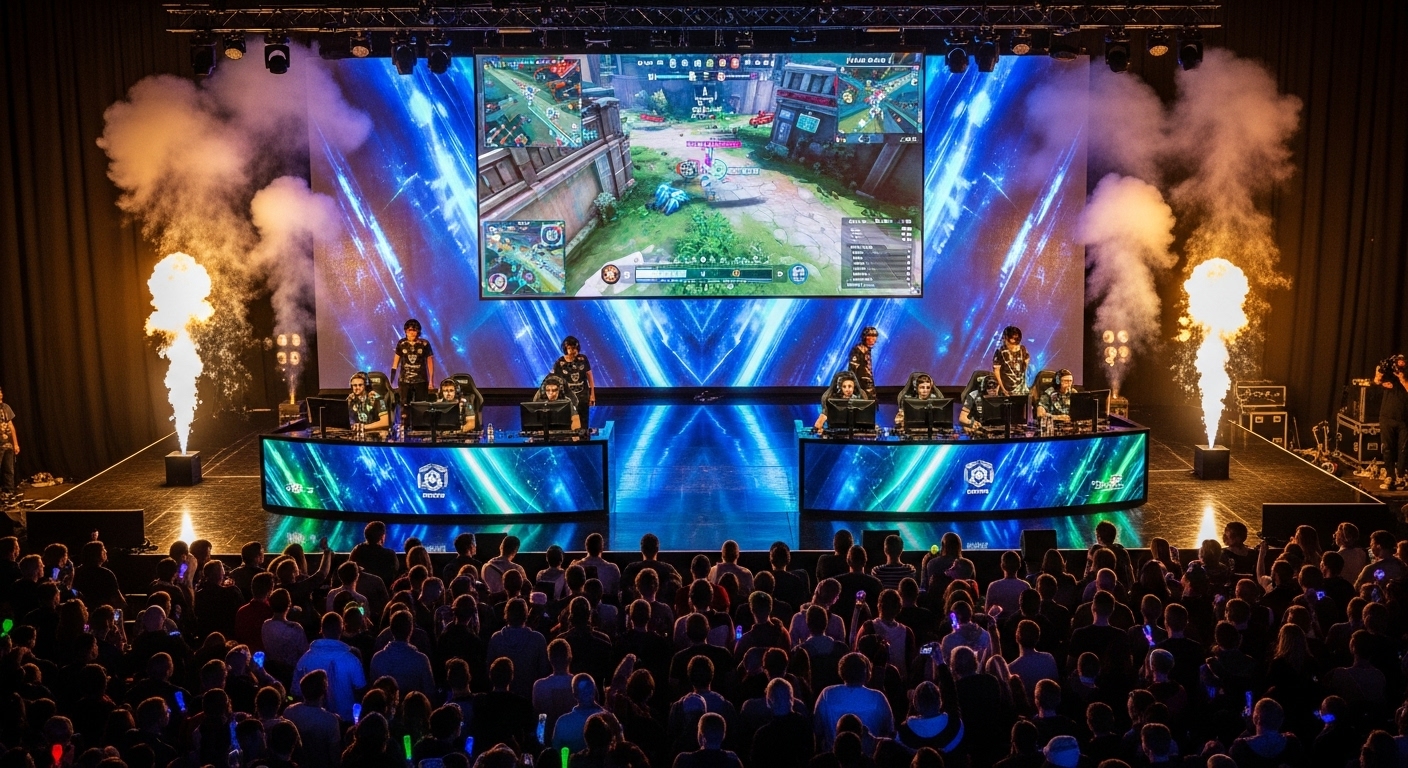
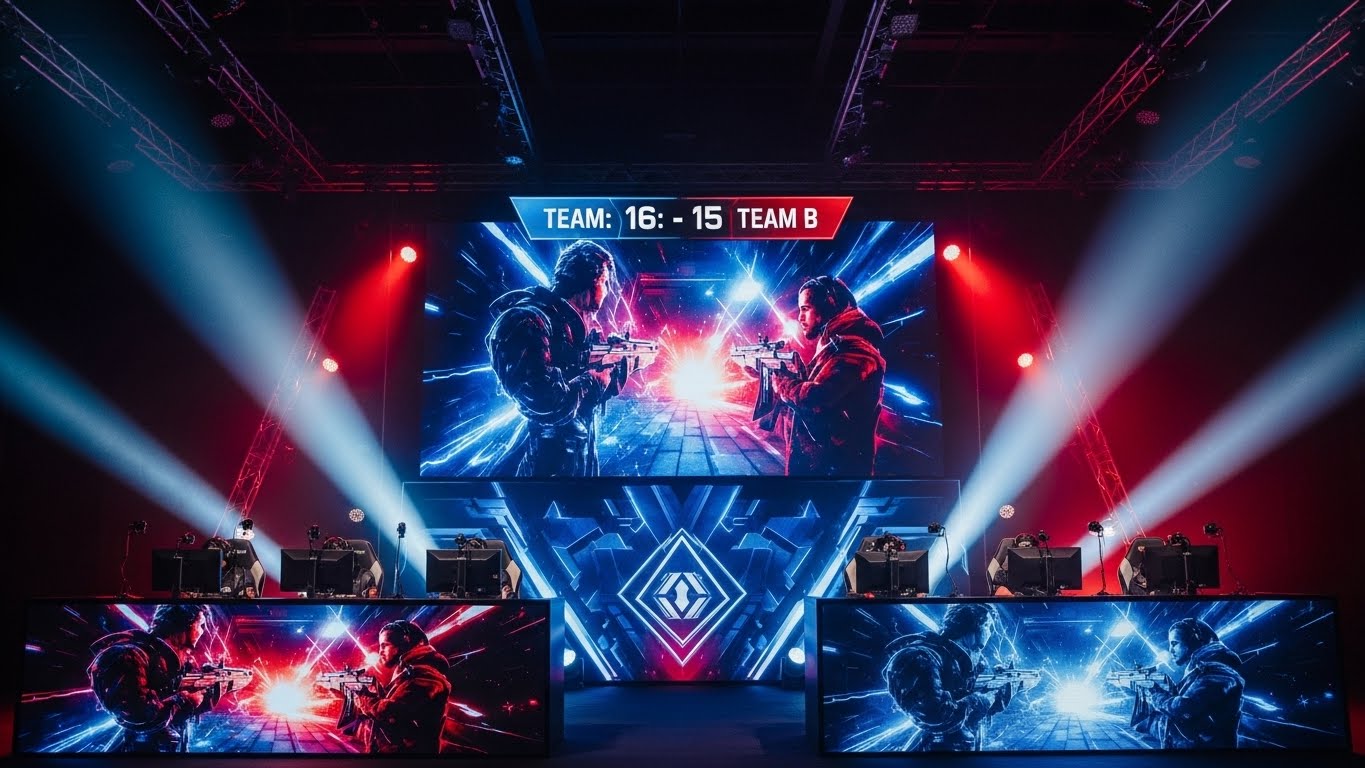
Over the last decade, esports has evolved from a niche hobby to a global phenomenon, captivating millions of fans and creating a thriving industry worth billions of dollars. With its immense popularity, esports has fundamentally changed how we view gaming, sports, and entertainment. What was once just a pastime for competitive gamers has now become a mainstream form of entertainment, attracting millions of viewers, sponsorships from major corporations, and the emergence of professional leagues and tournaments. In this blog post, we will take an in-depth look at the world of esports, its origins, rapid growth, and its impact on both the gaming industry and society at large.
What Exactly is Esports?
Esports, short for “electronic sports,” refers to competitive video gaming. It involves players or teams competing against one another in organized tournaments, often with professional players, live broadcasts, and substantial prize money. Unlike casual gaming, esports demands skill, strategy, and often long hours of practice, much like traditional sports. The games featured in esports competitions are diverse and can span across various genres, including first-person shooters (FPS), multiplayer online battle arenas (MOBAs), real-time strategy (RTS) games, and even sports simulations.
Some of the most well-known games in the esports world include League of Legends, Dota 2, Counter-Strike: Global Offensive, Fortnite, and Call of Duty. These games are typically played in multiplayer formats, where teams or individuals compete against each other to achieve objectives and secure victory. As the popularity of esports continues to rise, the scope of the games involved continues to expand, with new titles and game genres finding their place in competitive circuits.
The Origins of Esports: From Niche to Mainstream
The origins of esports can be traced back to the early days of competitive gaming. In the 1970s and 1980s, video games like Space Invaders and Pong became household names, but it wasn’t until the late 1990s that the idea of competitive gaming truly began to take shape. One of the first major milestones in esports history occurred in 1997 with the Red Annihilation tournament for the game Quake, which attracted professional players from around the world. However, esports didn’t truly take off until the early 2000s.
South Korea played a pivotal role in the rise of esports. In the early 2000s, games like StarCraft became cultural phenomena in South Korea, leading to the creation of the Korean e-Sports Association in 2000. Major television networks began broadcasting esports tournaments, and players achieved celebrity status in the country. This marked the beginning of esports becoming a widely recognized and respected form of entertainment. The success of South Korean esports eventually inspired other countries to establish their own competitive gaming scenes.
As broadband internet became more accessible worldwide, competitive gaming spread beyond South Korea to other regions, especially Europe, North America, and China. With platforms like Twitch launching in 2011, fans had easier access to live streams of their favorite tournaments, players, and teams. The rise of streaming not only helped increase the visibility of esports but also enabled players to build large fanbases and monetize their gameplay through sponsorships, donations, and advertisements.
The Growth of Esports: A Billion-Dollar Industry
Over the last decade, the esports industry has grown at an unprecedented rate. Esports tournaments now regularly attract millions of viewers, both online and in person. For example, the League of Legends World Championship, The International (Dota 2), and Overwatch League consistently draw massive global audiences, with prize pools reaching tens of millions of dollars. In fact, The International 2018 set a new record with a prize pool of over $25 million, making it one of the largest prize pools in the history of competitive sports.
The expansion of esports can be attributed to several key factors. First and foremost, the accessibility of high-speed internet has allowed people from all over the world to participate in and watch live gaming competitions. As more people gain access to broadband and mobile internet, the global reach of esports grows exponentially. Furthermore, the rise of streaming platforms like Twitch, YouTube Gaming, and Facebook Gaming has made it easier for fans to watch esports events and interact with players in real time. These platforms have become a cornerstone of the esports ecosystem, allowing fans to support their favorite teams and players through donations, subscriptions, and sponsorships.
Another driving force behind the growth of esports is the involvement of major corporations and investors. Global brands from various industries, including technology, energy drinks, apparel, and even traditional sports, have recognized the immense potential of esports as a lucrative market. Sponsorships and brand deals have poured in, with companies like Intel, Red Bull, and Coca-Cola signing major endorsement deals with esports organizations and tournaments. This has allowed esports to offer enormous prize pools, host larger events, and increase the overall production value of broadcasts.
Esports has also gained credibility through its professionalization. Unlike casual gaming, where players may simply play for fun, competitive esports players must adhere to rigorous training schedules and maintain a high level of skill. Top players often spend 8–12 hours a day practicing, refining their strategies, and analyzing their gameplay to stay ahead of the competition. As a result, esports athletes are often treated with the same level of respect and admiration as traditional sports athletes.
Esports and Traditional Sports: A New Frontier for Entertainment
One of the most fascinating aspects of esports is how it intersects with traditional sports. As esports has grown, many traditional sports organizations have recognized its potential and moved to incorporate gaming into their portfolios. For example, basketball teams like the NBA’s NBA 2K League and football clubs like Paris Saint-Germain and Manchester City have established their own esports divisions or sponsored esports teams. In some cases, sports teams have even purchased existing esports organizations to increase their brand presence in the competitive gaming world.
This blending of traditional sports and esports is not just about brand recognition. There are real synergies between both forms of entertainment. For instance, some sports teams use esports to attract younger fans, while esports players often look up to traditional athletes for inspiration and role models. The growth of esports has also led to the development of specialized esports arenas, where major tournaments are held in front of large, live audiences—similar to stadiums used for traditional sports.
The ability to blend these two worlds has also opened up new opportunities for broadcasters. Networks like ESPN, Fox Sports, and Turner Sports have all started to cover major esports events, bringing competitive gaming to a broader, more diverse audience. Even Olympic organizers have shown interest in including esports as a medal event in the future, recognizing that competitive gaming has become as popular as any traditional sport.
The Social and Cultural Impact of Esports
Beyond its impact on entertainment and business, esports has significantly influenced social and cultural dynamics. For one, it has changed the way people view gaming. Video games, once considered a solitary activity, have evolved into a social experience where players interact with others across the globe. Esports communities provide a sense of belonging and camaraderie, as fans and players alike share a passion for gaming and competition.
Esports has also broken down many barriers in terms of gender and inclusivity. While gaming has historically been male-dominated, esports is more inclusive than many traditional sports, with increasing participation from women and underrepresented groups. Female players, commentators, and coaches are now becoming more visible in the esports scene, and there is a growing push to create more diverse and equitable environments for everyone.
Furthermore, esports has helped reshape the perception of gaming as a career. With the rise of professional gaming leagues, game developers, event organizers, and broadcasters, esports has provided a viable career path for those passionate about gaming. In addition to professional players, individuals can now pursue careers in esports-related fields such as content creation, event management, and game design.
The Future of Esports
The future of esports looks incredibly bright, with continued growth in both its fanbase and financial landscape. As new technologies emerge, esports will become even more immersive and accessible. One of the most exciting areas for the future of esports is virtual reality (VR) and augmented reality (AR). As VR and AR technology become more mainstream, esports competitions could take on a new dimension, with players and viewers experiencing events in a more interactive and immersive way.
The continued rise of mobile gaming is also likely to play a significant role in the future of esports. Mobile esports is already a major industry in regions like Southeast Asia, and it’s expected to continue growing in the coming years. The accessibility and convenience of mobile gaming will help expand esports to an even broader audience.
Lastly, esports is likely to see increased mainstream recognition. As more traditional sports teams, sponsors, and media outlets get involved, esports will continue to gain legitimacy and exposure. We may even see esports featured in major global sporting events like the Olympic Games in the near future.
Conclusion
Esports is no longer just a hobby or a subculture—it’s a thriving global industry that has redefined the world of gaming, entertainment, and sports. From its humble beginnings to its current status as a multi-billion-dollar industry, esports has proven to be a force to be reckoned with. With the rise of professional leagues, massive viewership, and increasing mainstream recognition, the future of esports is incredibly exciting.
As esports continues to grow and evolve, it will continue to shape the future of gaming and entertainment, providing new opportunities for players, fans, and businesses alike. Whether you’re a die-hard fan or a casual viewer, there’s no denying that esports has become an integral part of the modern entertainment landscape.